Unlocking human potential
Antony Oliver
22 October 2026
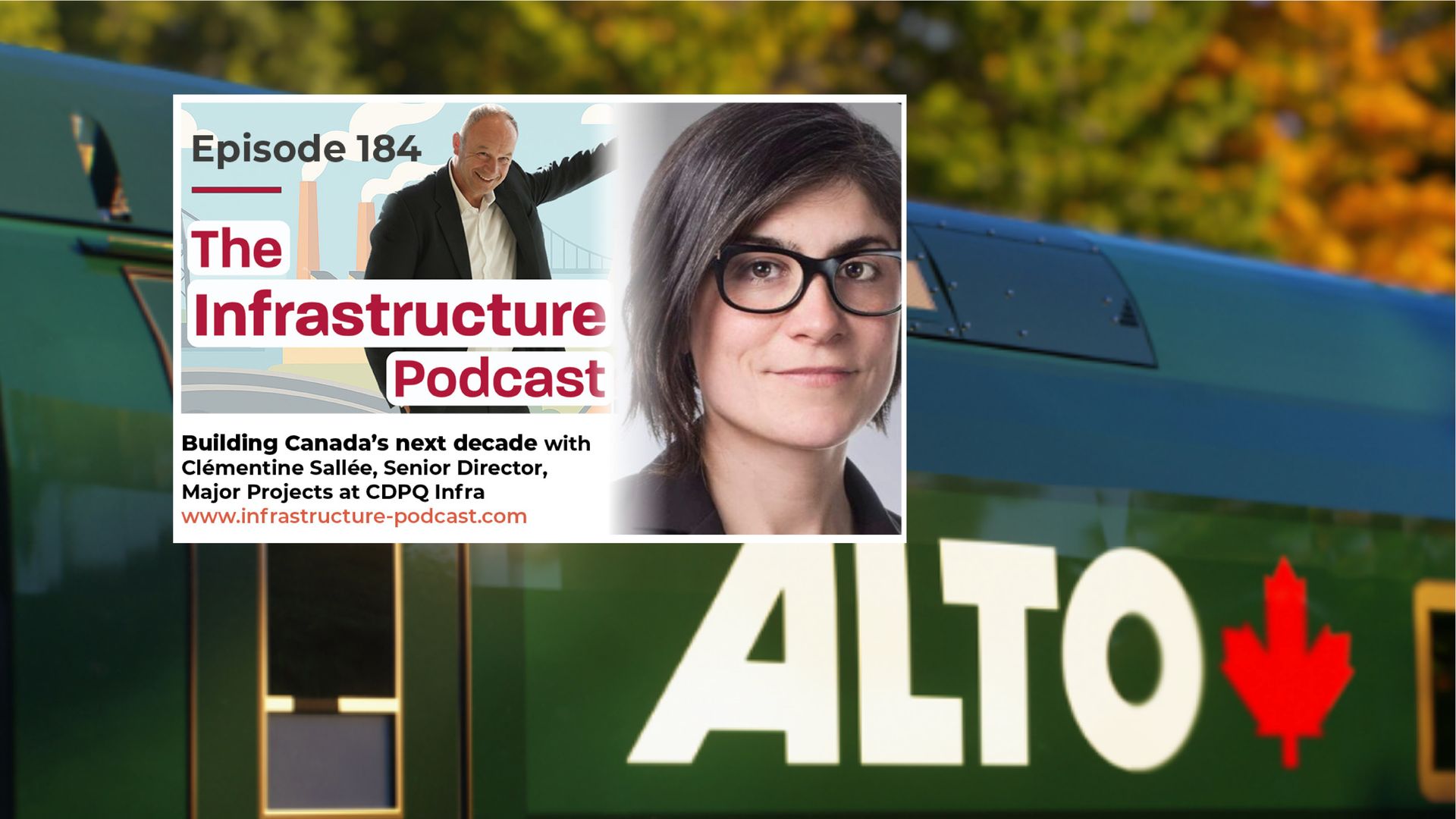
What can Canada’s infrastructure leaders learn from Québec's recent major project successes? And indeed, what can the UK learn from Canada? This latest episode of The Infrastructure Podcast with Clémentine Sallée, Senior Director of Major Projects at CDPQ Infra was recorded live at the recent Transforming Infrastructure Performance Summit in Toronto hosted by the Infrastructure Policy Advancement team at Bentley Systems and the UK Government. Have a listen here or find the episode wherever you get your podcasts - search “The Infrastructure Podcast” on Spotify, Apple, Google Québec is currently delivering some of the country’s most ambitious infrastructure projects, from new high speed rail and urban transit expansions to massive airport developments and nuclear power stations. But beyond the scale, these projects offer critical insights into: - Leadership and partnership models for complex programmes - Procurement and commercial strategy for scaling delivery - Effective governance in challenging environments With 20+ years of global experience in major project delivery and infrastructure finance, Clémentine brings a refreshing perspective on how to deliver complex infrastructure successfully.
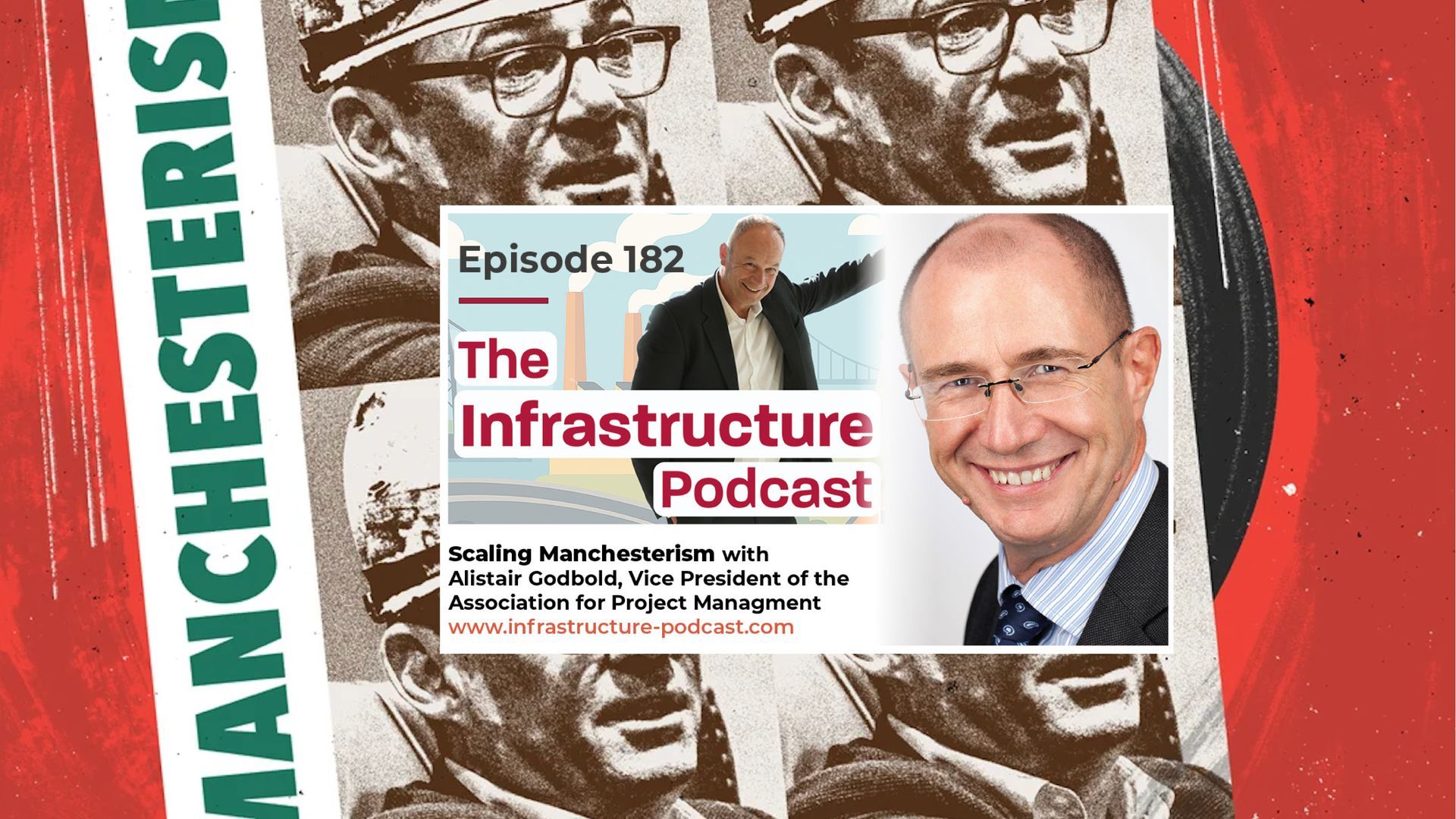
Can Manchesterism transform UK project delivery? In the latest episode of The Infrastructure Podcast, I’m joined by Alistair Godbold, Vice President of the Association for Project Management and Director at The Nichols Group to unpack what this new era of devolved decision making really means for the sector. Have a listen here: find all 182 episodes wherever you get your podcasts - search “The Infrastructure Podcast” on Spotify, Apple, Google or YouTube. As Andy Burnham’s regional Manchesterism approach, built on devolved power, sustained transport investment, and community-centric regeneration, looks to scale nationally, major questions remain about whether central government and the wider sector are truly set up to execute. And with a £718bn infrastructure pipeline in focus, the spotlight has firmly turned from project planning to actual project delivery.

As debate over Heathrow Airport’s runway 3 expansion project rumbles on again, this week’s special episode of The Infrastructure Podcast talks to Helen Elsby, Heathrow's chief development officer about the actual multi-billion pound work programme going on right now. The episode was recorded live at the latest Twin Talks event in London hosted by Bentley Systems’ Infrastructure Policy Advancement team and includes a panel discussion with Nigel Cole, managing director infrastructure at Mace Construct and Harriet Wheeldon, director at Mott MacDonald, both key members of the Heathrow delivery supply chain. Have a listen here or find all 181 episodes wherever you get your podcasts - search “The Infrastructure Podcast” on Spotify, Apple, Google or YouTube. With passenger volumes continuing to reach record highs, Heathrow continues to progress plans to combat capacity constraints and keep passengers and cargo moving in, out and across the country smoothly. The scale of ambition is staggering: a £1.3 billion commitment in 2026 to conclude the current H7 investment cycle, more than £5 billion planned for the forthcoming H8 period (2027–2031). The green-lighting of planning work for a potential further multibillion pound investment through the R3 expansion programme adds to the complexity. As the discussion hears, Heathrow plans to build faster, smarter, and more efficiently to deliver maximum value for passengers, airlines, and the UK economy.
With nuclear, wind, solar, and electrification dominating the Net Zero conversation, what role, if any, does the massive gas network already sitting right beneath our feet really have in the UK's energy transition? In the latest episode of The Infrastructure Podcast, I'm joined by James Earl, Chief Executive of Future Energy Networks (FEN), to explore how exactly how the UK's world-class gas network can help power our future. Have a listen here or find all 180 episodes wherever you get your podcasts - search “The Infrastructure Podcast” on Spotify, Apple, Google or YouTube. In the episode we dive into: o Why a secure and resilient energy transition cannot rely on electricity alone. o The soaring energy demands driven by new technologies like AI data centres. o How existing gas infrastructure can serve as a vital energy storage asset and spearhead the use of green gases. o The role of hydrogen and biomethane in our energy future.

In the latest episode of The Infrastructure Podcast I chat to Javier Cavada Camino, PhD (Dr. Eng.), President and CEO of Mitsubishi Power EMEA about how the UK can balance the insatiable demand for power from the new data centres driving our AI revolution with the need to keep the nation’s lights on. Have a listen here or find all 179 episodes wherever you get your podcasts - search “The Infrastructure Podcast” on Spotify, Apple, Google or YouTube. For all the current debate around slowing down AI development, the reality is that the UK remains committed to building the data centre backbone required to underpin the technology. But given the current pressure on the UK’s power generation, distribution and storage infrastructure, the question is how we bridge the widening gap between supply and demand. Javier and Mitsubishi are leading development of the off-grid, so called “behind the meter” technologies designed to close that gap with low carbon solutions. We are talking advanced hydrogen and biomethane read turbines, new power storage technologies to smooth the flow of wind and solar power, and standalone uninterrupted power supply systems helping to stabilise local grids. And since data centres can be planned and built in 18-36 months compared to the decades now required for new centralised power infrastructure to come on line, it is clearly technology that cannot be ignored.
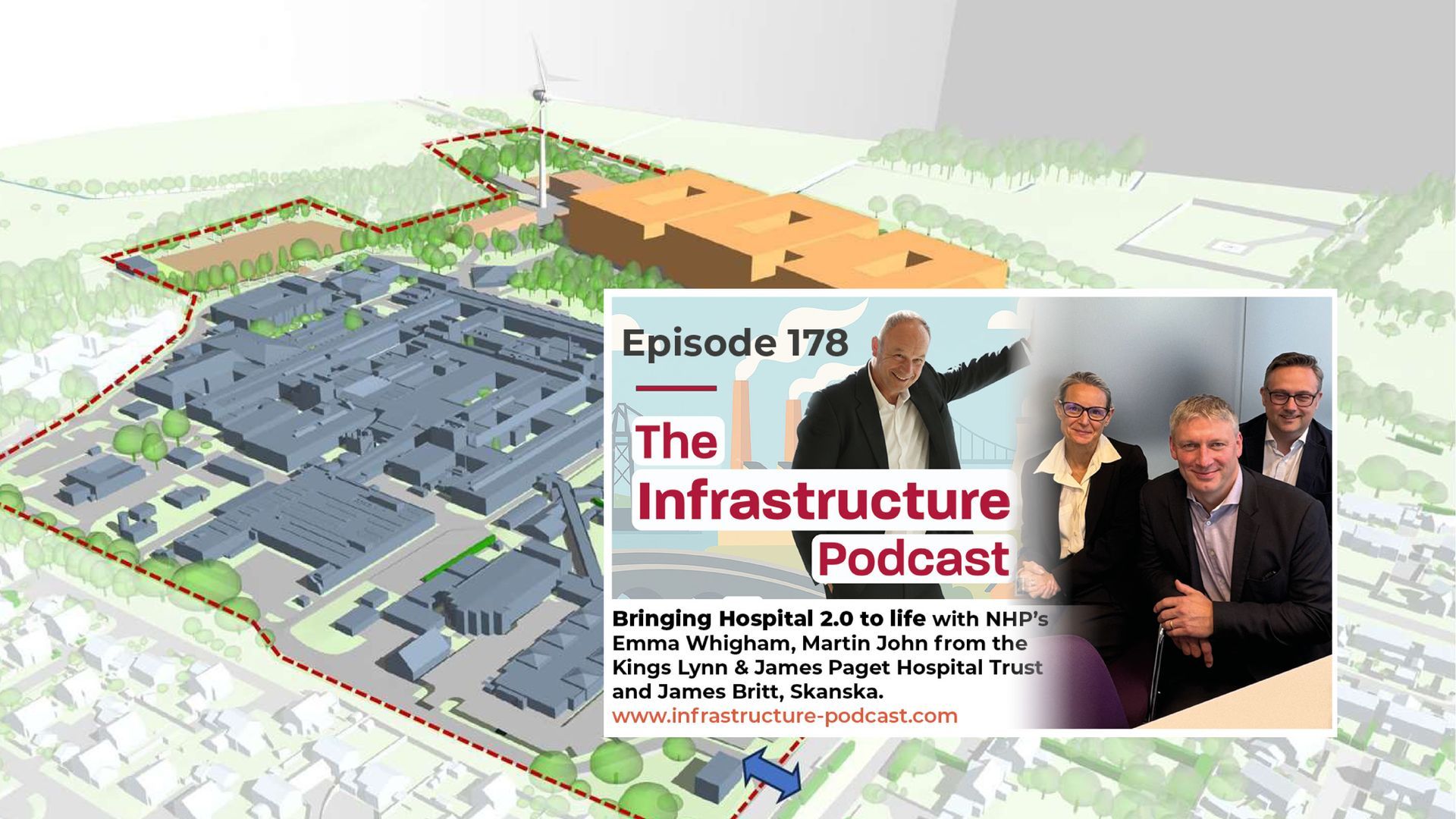
What does the single largest investment in NHS infrastructure in recent decades actually look like in reality? My guests on The Infrastructure Podcast this week are the people on the front line of New Hospital Programme 2.0 Alliance delivery at the James Paget University Hospitals NHS Foundation Trust in Great Yarmouth and the Queen Elizabeth Hospital NHS Trust in Kings Lynn. Have a listen here or find all 178 episodes wherever you get your podcasts - search “The Infrastructure Podcast” on Spotify, Apple, Google or YouTube. It’s a fascinating conversation with Emma Whigham, the NHP Hospital 2.0 Alliance Director, Martin John, Strategic Director for Kings Lynn and James Paget hospital trusts, and James Britt, Programme Director at construction partner, Skanska as we talk through what makes the new H2A Alliance truly transformational in terms of delivering better outcomes for the client and for patients and for the clinical staff. In the first wave ten alliance partners have been secured across eleven hospital trusts to start – and test - this new delivery approach. We are talking industrialised delivery; deep collaboration; truly national supply chains and long term systemic approach to design delivery and operation of our future hospitals. And with £37bn at stake in the first of three waves of investment stretching out to the mid 2040s it is a programme that really has the opportunity to move the dial when it comes to transforming delivery.
How do we turn the UK government’s £718 billion infrastructure investment ambition into reality? My guest on The Infrastructure Podcast this week is Paul Reilly, President & Managing Director for the UK & Ireland at global consulting giant WSP and he certainly has a clear vision for making it happen. Have a listen here or find all 177 episodes wherever you get your podcasts - search “The Infrastructure Podcast” on Spotify, Apple, Google or YouTube. With a new political landscape, the creation of National Infrastructure and Service Transformation Authority (NISTA), and ambitious targets to deliver 1.5 million new homes and meet critical net-zero goals, the UK infrastructure sector is key to embracing the opportunity. But there are some major hurdles that we need to meet head-on: · Modernising and industrialising design and construction · Closing the skills gap · Embracing innovation and embedding digital technology Paul shares his experience and boundless enthusiasm – in particular around how businesses like WSP in the UK & Ireland and its 12,000 UK and Ireland specialists (and a global network of 83,000+) are helping to rethink ambition and drive real delivery transformation.

When I asked Sir John Armitt , my guest on The Infrastructure Podcast this week, about how politicians can accelerate their infrastructure aspirations he answered simply that they should “be more honest, be more open about the challenge. Don't kid people that you're going to do something because it sounds good.” I couldn’t agree more. Have a listen here or find all 173 episodes wherever you get your podcasts - search “The Infrastructure Podcast” on Spotify, Apple, Google or YouTube. As the former longstanding chair of the National Infrastructure Commission, a past president of the Institution of Civil Engineers (ICE) and leader of many major projects including the 2012 London Olympic Games, a conversation with Sir John is always enlightening and mind expanding. In his latest role as chairman of the Public Private Partnership Commission, a new body set up with consultant Bradshaw Advisory, Sir John proposes a new Office for Budget Responsibility to oversee the nation’s infrastructure plans. This would, as he puts it, shield major investments from political interference and move decisions away from the so-called "Treasury brain". So much to chat through as always with Sir John as he takes us through his thinking around how new prime minister Andy Burnham can use his No.10 North and devolution plans to accelerate the vital infrastructure visions, the role of National Infrastructure and Service Transformation Authority (NISTA) and why it is so critical that the value of long term investment in decent infrastructure is understood by politicians.

Are mega projects actually delivering for the communities they serve; or do we continue to simply measure success solely by hitting budgets and deadlines? I discussed this issue with Victoria Johnson, Vice President at HDR En gineering on my recent trip to New York. She reckons the true measure of infrastructure is the human return on investment: the carbon reduction, economic equity, and lasting community benefit that investment creates Have a listen here or find all 175 episodes wherever you get your podcasts - search “The Infrastructure Podcast” on Spotify, Apple, Google or YouTube. I caught up with Victoria after she had led the discussion on this critical topic at the Bentley Systems Transforming Infrastructure Performance Summit in New York. And having advised the Biden-Harris administration on the $1.2T Bipartisan Infrastructure Law and led mega-transformations across NY's major airports, Victoria has no shortage of experience of the kind of high-level policy and street-level impact that we need to embrace. Her recent mega project work includes transformation of JFK, LaGuardia and Newark airports in New York and the planning of Olympic legacies at Milano Cortina 2026 and LA 2028 Olympic games - about which many deep insights will be shared in an upcoming white paper she is co-authoring in collaboration Bentley Systems and Bocconi University in Italy. So much to get stuck into in this conversation: - Lessons in legacy planning from the upcoming LA 2028 Olympics. - How to balance immediate transit needs with 21st-century climate goals. - Why "social scaffolding" matters more than concrete assets. - How the recent Milan Cortina winter Olympic Games provides lessons about the way we plan major infrastructure
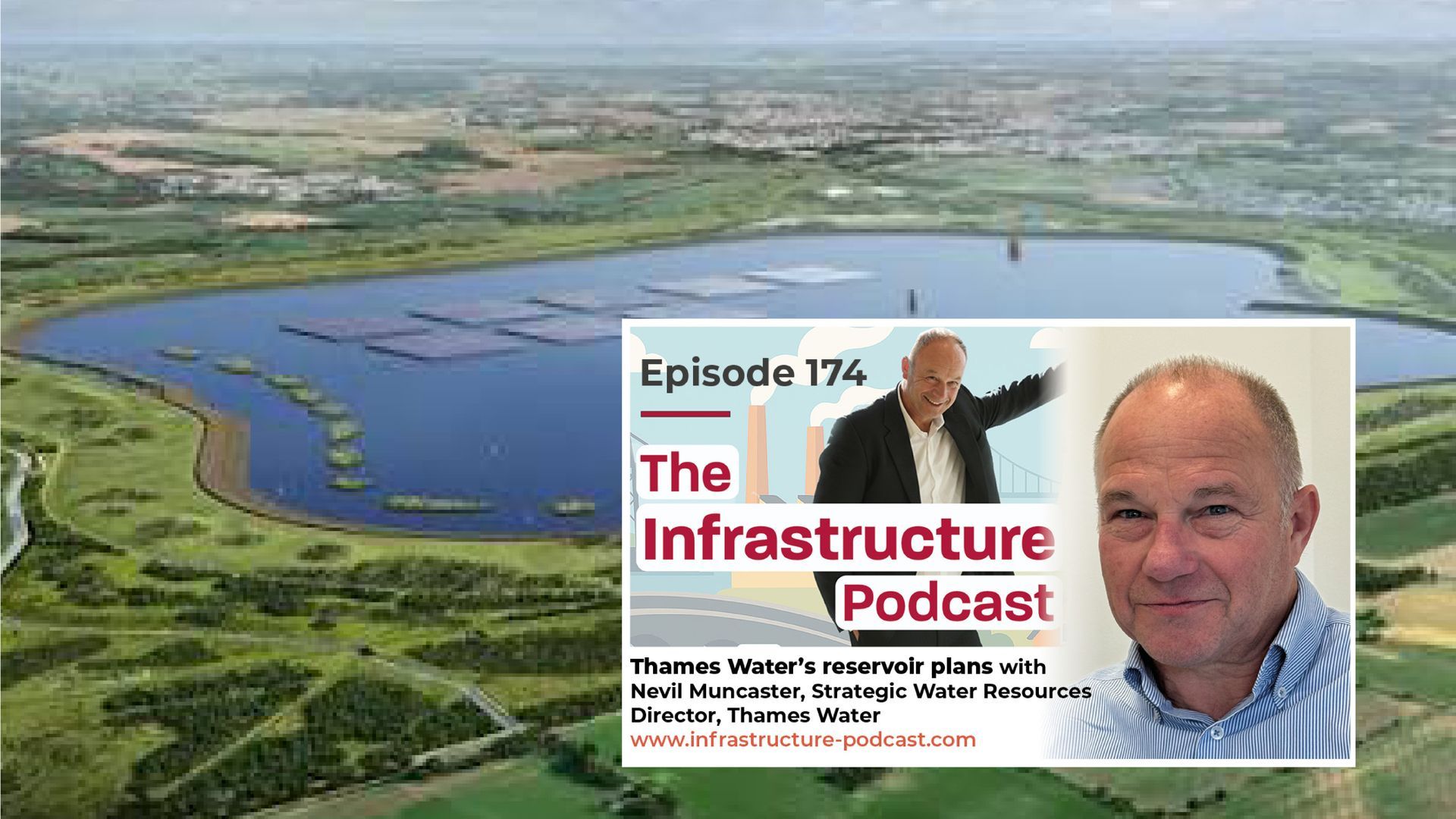
The UK hasn’t built a major new reservoir in over 30 years. Yet, according to Ofwat, England faces a potential water shortfall of up to 5 billion litres a day by 2055. In the latest episode of The Infrastructure Podcast, I sit down with Nevil Muncaster, Strategic Water Resources Director at Thames Water. Nevil is leading the proposed £7.5 billion White Horse Reservoir in Oxfordshire, a 12 km² mega-project designed to hold 150 billion litres of water and secure drought resilience for 15 million people across London and the South East. Have a listen here: or find all 173 episodes wherever you get your podcasts - search “The Infrastructure Podcast” on Spotify, Apple, Google or YouTube. As debt laden Thames Water announces new regional hosepipe bans, the tension is clear: fixing leaks is critical, but without major new storage, long-term water security remains out of reach. While supporters call it a non-negotiable insurance policy against climate change and population growth, the path to a 2040 opening is complex with major issues such as: - Community and environmental pushback over its ecological footprint, carbon cost, and disruption to local livelihoods. - Financial headwinds, with Thames Water balancing a major debt load alongside an autumn cash-flow bottleneck. - Planning milestones, with the Development Consent Order (DCO) application targeted for this year.